Most Profitable Etsy Niches in 2026: 15 Ideas That Actually Sell
Picking a niche is the single most important decision you'll make as an Etsy seller. Get it right and you'll have consistent sales with less competition. Get it wrong and you'll burn months creating products nobody searches for. Here are 15 niches that are actually making money on Etsy right now — with real data on pricing, competition, and what to watch out for.
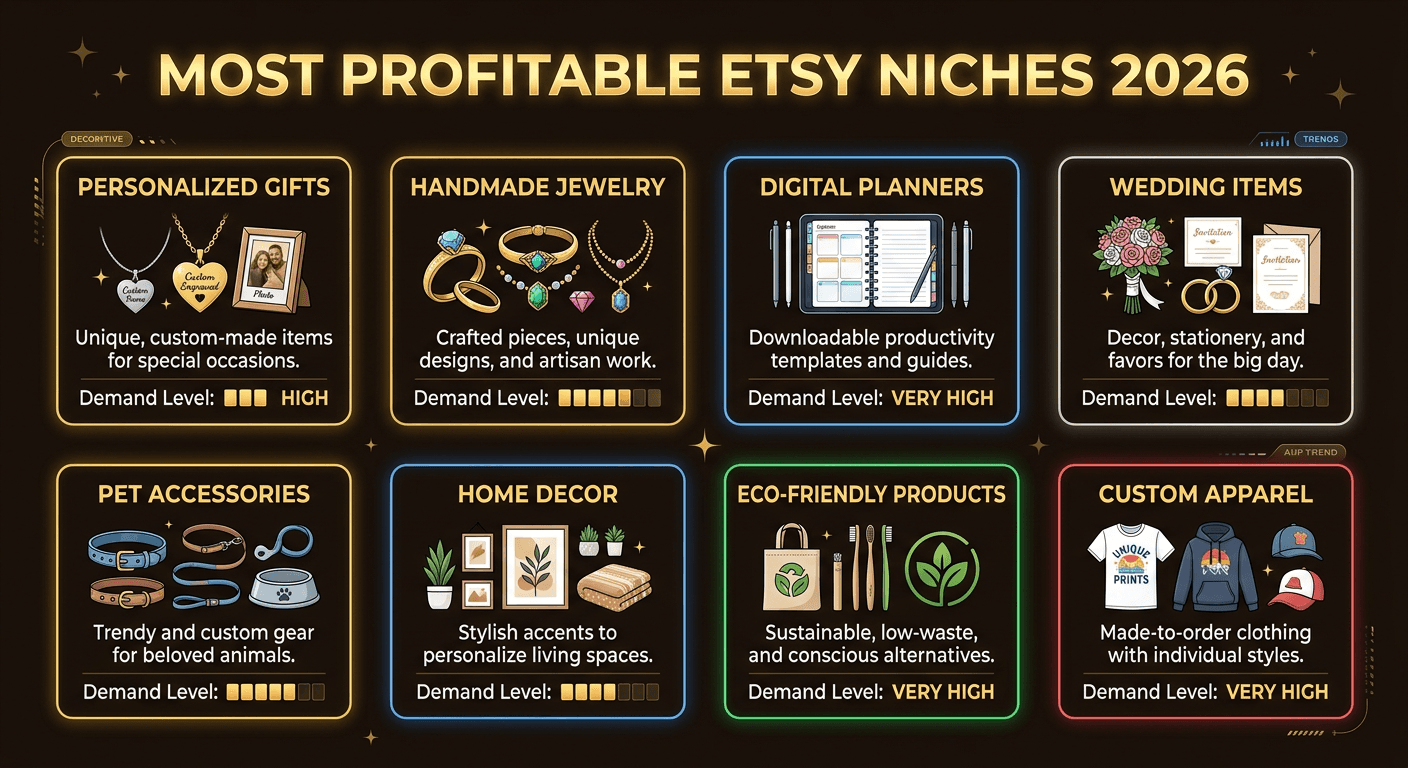
Etsy has over 9 million active sellers in 2026. That sounds intimidating, but here's what most new sellers miss: the vast majority of those shops are in the same five oversaturated categories, competing on price and getting buried. The sellers who actually build sustainable income pick specific niches where demand is high but competition is manageable.
We analyzed top-performing Etsy shops, search trends, and category data to find 15 niches that are genuinely profitable right now. For each one, we'll cover what sells, realistic price ranges, competition level, and any compliance considerations you need to know before you start listing. If you're just getting started, pair this guide with our complete guide to starting an Etsy shop.
1. Personalized Gifts
Personalization remains Etsy's biggest competitive advantage over Amazon and big-box retailers. Buyers search for items with names, dates, coordinates, initials, and custom messages — and they're willing to pay a significant premium for them.
What sells: Custom cutting boards with family names, personalized map prints with GPS coordinates, engraved jewelry boxes, custom pet portraits from photos, monogrammed leather goods, and milestone gifts (anniversaries, graduations, new homes).
Price range: $25–$80+ for physical items. The personalization alone justifies a $10–$30 markup over non-personalized equivalents.
Compliance note: Avoid using trademarked phrases or logos in your personalized products. “Custom Disney-style” lettering or character-inspired designs can trigger takedowns. Check our trademarked words guide before creating any brand-adjacent personalized items.
2. Handmade Jewelry
Jewelry is Etsy's most searched category, which means massive demand — but also intense competition. The key to success in 2026 is sub-niching: minimalist gold-filled pieces, birthstone collections, anxiety rings, or matching couple sets rather than generic beaded bracelets.
What sells: Minimalist gold-filled necklaces, birthstone rings, name necklaces, anxiety spinner rings, waterproof jewelry (titanium, surgical steel), matching friendship bracelets, and coordinates jewelry.
Price range: $15–$65 for fashion jewelry. $50–$200+ for fine materials (sterling silver, solid gold). Margins are strongest at the $30–$60 sweet spot.
Compliance note: Etsy requires jewelry to be accurately described. Misrepresenting gold-plated items as “solid gold” or failing to disclose materials can violate consumer protection laws and get your listings removed. Product photography is critical in this niche — check our Etsy shop setup guide for photo tips.
3. Digital Planners & Templates
Digital products are the ultimate passive income play on Etsy. You create them once and sell them infinitely with zero shipping costs, no inventory, and no per-unit production cost. In 2026, the market has matured, but niche-specific planners still perform exceptionally well.
What sells: GoodNotes and Notability planners, Canva social media templates, budget spreadsheets (Google Sheets), wedding planning binders, fitness trackers, ADHD-specific planners, teacher lesson plan templates, and small business financial templates.
Price range: $3–$15 for individual templates. $15–$45 for comprehensive bundles. Margins are 85–95% after Etsy fees since there's no cost of goods.
Compliance note: Don't use copyrighted fonts or design elements in your templates. Ensure any fonts you use have a commercial license. Read our guide to selling digital downloads on Etsy for the full breakdown on licensing and delivery best practices.
4. Wedding Items
Weddings are a perennial Etsy goldmine. Couples actively prefer Etsy over mass-market retailers for unique, customizable wedding items. The average wedding budget continues to climb, and Etsy captures a growing share of that spending.
What sells: Digital wedding invitation suites (save-the-dates, RSVP cards, menus), custom wedding signs (acrylic, wood), personalized favors (candles, coasters, seed packets), wedding party proposal boxes, cake toppers, and seating charts.
Price range: $8–$25 for digital invitations. $25–$120 for physical signs and decor. $15–$40 for favors (per set). Bulk orders from wedding parties can push single transactions to $200+.
Compliance note: Wedding items are generally low-risk for trademark issues, but avoid using copyrighted song lyrics, movie quotes, or licensed character themes in your designs. “Disney-themed” wedding items are a common takedown target.
5. Pet Accessories
Pet owners spend freely on their animals, and the key differentiator on Etsy is breed-specific products. Generic dog bandanas are everywhere, but “Goldendoodle mom” merchandise or breed-specific collar charms have less competition and higher customer loyalty.
What sells: Personalized pet collars with name and phone number, breed-specific tote bags and mugs, custom pet portraits (digital and physical), pet bandanas by breed, pet memorial items, and matching pet-owner accessories.
Price range: $12–$35 for accessories. $30–$80 for custom pet portraits. $15–$25 for breed-specific merchandise. Pet owners are notably less price-sensitive than average buyers.
Compliance note: Be careful with pet consumables (treats, supplements) as these may require FDA compliance. Stick to accessories and decor to avoid regulatory headaches.
6. Home Decor
Home decor is a massive category, but success comes from targeting specific aesthetics and formats. Custom wall art, personalized family name signs, and niche-specific decor (farmhouse, mid-century modern, boho) outperform generic art prints.
What sells: Custom family name signs (wood, acrylic), digital downloadable wall art, personalized address signs, custom map prints, gallery wall sets, seasonal door hangers, and custom neon-style LED signs.
Price range: $5–$15 for digital prints. $25–$75 for physical wall art. $40–$150+ for custom signs and LED pieces. Bundling digital prints into gallery wall sets significantly increases average order value.
Compliance note: This niche has high trademark risk. Sellers frequently get flagged for using copyrighted quotes, brand logos, sports team colors or names, and character imagery. Review the full trademarked words list before creating any text-based home decor.
7. Eco-Friendly Products
Sustainability is no longer a niche — it's a value system. Etsy buyers in 2026 actively search for eco-friendly alternatives to everyday products, and they'll pay more for them. The handmade nature of Etsy aligns perfectly with the sustainability narrative.
What sells: Beeswax food wraps, reusable produce bags, natural beeswax candles, compostable phone cases, bamboo utensil sets, refillable cleaning products, seed paper greeting cards, and zero-waste starter kits.
Price range: $10–$30 for individual items. $25–$60 for starter kits and bundles. Eco-conscious buyers typically accept 15–30% price premiums over conventional alternatives.
Compliance note: Be truthful with sustainability claims. Terms like “biodegradable,” “organic,” and “compostable” have specific regulatory definitions. Making unsubstantiated environmental claims (greenwashing) can lead to listing removals and potential FTC issues.
8. Custom Apparel
Generic t-shirts are a race to the bottom, but hobby-specific and niche community apparel thrives on Etsy. The trick is targeting micro-communities: pickleball players, plant parents, D&D enthusiasts, nurses, teachers — groups with strong identity who love wearing it.
What sells: Profession-specific sweatshirts (nurse, teacher, engineer humor), hobby apparel (hiking, fishing, gardening), matching group shirts (bachelorette parties, family reunions), niche community tees, and custom embroidered hats.
Price range: $22–$40 for t-shirts. $35–$55 for sweatshirts and hoodies. $18–$30 for hats. Print-on-demand services keep upfront costs near zero. See our Etsy print-on-demand guide for setup details.
Compliance note: Apparel is one of the highest-risk categories for trademark violations. Fan art, sports references, brand parodies, and pop culture quotes are common takedown triggers. Never use trademarked team names, logos, or character likenesses — even “inspired by” versions get flagged.
9. Baby & Kids Items
Parents and gift-givers love personalized, high-quality baby items that feel special. Organic materials and safety certifications are increasingly important to this demographic. Personalized baby items make perfect shower and first-birthday gifts.
What sells: Personalized baby blankets with names, custom nursery wall art, organic cotton bibs and burp cloths, name puzzles, milestone cards, baby memory books, and custom birth announcement prints.
Price range: $15–$45 for personalized items. $25–$60 for organic baby clothing. $20–$40 for nursery decor. Gift-givers are especially price-insensitive when buying for babies.
Compliance note: Baby and children's products face strict safety regulations under CPSIA (Consumer Product Safety Improvement Act). Items for children under 12 must meet lead content limits and may require third-party testing. Wearable items need CPSC compliance. Take safety requirements seriously in this niche.
10. Stickers & Journaling Supplies
The sticker and journaling community on Etsy is massive and fiercely loyal. Buyers in this niche make repeat purchases, follow favorite creators, and share finds in dedicated communities. Success requires a distinctive art style and consistent branding.
What sells: Planner sticker sheets, laptop and water bottle stickers, bullet journal supplies, washi tape, aesthetic sticker packs by theme (cottagecore, dark academia, kawaii), motivational quote stickers, and digital sticker sets for GoodNotes.
Price range: $3–$8 for individual sticker sheets. $10–$20 for sticker bundles. $2–$5 for digital sticker sets. Volume is key — most successful sticker shops sell hundreds of units per month.
Compliance note: Character stickers (anime, Disney, gaming characters) are the #1 trademark violation in this category. Original art in trending aesthetics performs just as well without the legal risk. If you're selling digital stickers, review our digital downloads guide for delivery setup.
11. SVG & Cut Files for Cricut/Silhouette
The Cricut and Silhouette crafting communities are enormous, and these crafters are constantly buying new SVG cut files for their projects. Like other digital products, SVGs have zero marginal cost and infinite scalability. The audience is highly engaged and makes frequent repeat purchases.
What sells: Seasonal SVG bundles (Christmas, Halloween, Valentine's), monogram and name designs, wedding SVGs, mom/dad life quotes, teacher appreciation designs, holiday-specific cut files, and layered mandala SVGs.
Price range: $1.50–$5 for individual SVGs. $8–$25 for themed bundles. $30–$50+ for mega bundles (100+ files). The low price point drives high volume and impulse purchases.
Compliance note: SVG sellers face unique trademark challenges. Designs featuring brand names, sports teams, or character silhouettes are rampant in this category — and so are takedowns. Stick to original designs and clearly state the commercial use license terms in your listings. Note that “Cricut” and “Silhouette” are trademarked brands — you can reference compatibility but should not imply endorsement.
12. Candles & Aromatherapy
Candles have been an Etsy staple for years, but the market has shifted toward unique scent stories, aesthetic vessels, and niche theming. Bookish candles, location-inspired scents, and novelty-labeled candles (funny gifts) outperform generic lavender jar candles.
What sells: Book-themed candles (“old library” scent), location candles (“rainy Seattle morning”), funny label candles (novelty gifts), soy wax candles with dried flowers, aromatherapy roller blends, wax melts in unique shapes, and candle-making kits.
Price range: $12–$30 for single candles. $25–$50 for gift sets. $8–$15 for wax melts. Branding and packaging are major differentiation factors in this category.
Compliance note: Candle sellers must comply with ASTM fire safety standards and include proper warning labels. Some states require candle makers to carry product liability insurance. Book-themed candles referencing specific titles or series (Harry Potter, Lord of the Rings) risk trademark issues — use generic literary themes instead.
13. Vintage Clothing & Accessories
Vintage is one of Etsy's three approved categories (alongside handmade and craft supplies), and it offers unique advantages: every item is one-of-a-kind, there's no manufacturing competition, and thrift-to-Etsy margins can be enormous. Items must be at least 20 years old to qualify as vintage on Etsy.
What sells: Vintage band tees and graphic tees, 90s and Y2K fashion, vintage designer bags (Coach, Dooney & Bourke), retro jewelry (gold chains, statement earrings), vintage denim (Levi's, Wrangler), vintage sportswear, and mid-century accessories.
Price range: $20–$60 for vintage clothing. $30–$150+ for designer vintage. $15–$40 for vintage jewelry. Source costs are often $2–$10 at thrift stores, yielding 5–15x margins.
Compliance note: Using brand names (Levi's, Nike, Coach) in vintage listings is generally permissible for accurate item description — this falls under nominative fair use. However, don't use brand names in ways that imply affiliation or endorsement. Counterfeit items will get your shop permanently banned.
14. Adaptive & Inclusive Products
This is one of the most underserved and fastest-growing niches on Etsy in 2026. Products designed for people with disabilities, sensory sensitivities, or specific accessibility needs fill a gap that mass-market retailers largely ignore. The audience is loyal and vocal about products that genuinely help.
What sells: Sensory-friendly clothing (tagless, seamless, soft fabrics), adaptive clothing with magnetic closures, fidget jewelry (spinner rings, textured bracelets), visual schedule boards for autism, braille greeting cards, accessible kitchen tools, and sensory toys and kits.
Price range: $15–$40 for sensory items. $25–$60 for adaptive clothing. $10–$30 for fidget jewelry. Buyers in this niche prioritize function and quality over price — they'll pay premium prices for products that genuinely work.
Compliance note: Avoid making medical claims about your products. Saying a weighted blanket “treats anxiety” crosses into medical device territory. Instead, describe the product features (“provides gentle deep pressure”) and let buyers draw their own conclusions.
15. AI-Enhanced Digital Art & Design Templates
AI tools have transformed what independent creators can produce. In 2026, the most successful sellers use AI as a starting point and add significant human refinement — custom editing, brand-specific adaptations, and curated collections. Pure AI-generated products with no human input face increasing buyer skepticism and potential policy scrutiny.
What sells: AI-enhanced social media template packs (Canva, Instagram), custom AI portrait styles (pet portraits, family illustrations), AI-designed pattern sets for fabric and wallpaper, logo template collections, AI-generated clipart bundles with human curation, and brand identity kits for small businesses.
Price range: $5–$20 for individual template packs. $15–$50 for comprehensive brand kits. $3–$12 for clipart bundles. Production speed is the major advantage — you can create and list new products in hours rather than days.
Compliance note: Etsy updated its policies in 2024 to require disclosure of AI-generated content. You must indicate when AI tools were used in product creation. Listings that fail to disclose AI involvement risk removal. Additionally, ensure AI-generated designs don't inadvertently replicate copyrighted or trademarked imagery — AI models can sometimes reproduce training data.
How to Validate Your Niche Before You Commit
Picking a niche from a list is step one. Validating that it's actually viable for your shop is step two. Here's a practical framework for evaluating any Etsy niche before you invest time and money:
Search Volume Check
Type your niche keywords into Etsy's search bar and watch the autocomplete suggestions. More suggestions = more search volume. Use tools like eRank or Marmalead to get estimated monthly search volumes. Aim for keywords with at least 1,000+ monthly searches on Etsy.
Competition Analysis
Search your niche on Etsy and note the total number of results. Under 10,000 results signals manageable competition. Over 100,000 means you'll need a strong sub-niche angle. Look at the top sellers — if they have thousands of reviews, they've been established for years. But also check: are there newer shops (under 1 year old) ranking on the first page? If yes, there's room for new entrants.
Profitability Math
Calculate your true costs before listing anything. Factor in materials, Etsy listing fees ($0.20 per listing), transaction fees (6.5%), payment processing fees (3% + $0.25), shipping costs, packaging, and your time. Your target margin should be at least 50% after all fees. If the math doesn't work at competitive prices, pick a different niche.
Compliance Pre-Check
Before creating a single product, run your niche through a compliance check. Are there trademark risks? Safety regulations? Etsy policy restrictions? Getting your shop suspended because you didn't research compliance upfront is the most expensive mistake a new seller can make. Our trademarked words guide covers the intellectual property angle, and our Etsy shop setup guide walks through the rest.
Found Your Niche? Protect It.
Before you list your first product, scan it for trademark risks, policy violations, and compliance issues. Unflagged checks your listings against trademark databases and Etsy's policies in seconds — so you can sell with confidence.
Scan Your Listings FreeFrequently Asked Questions
What is the most profitable niche on Etsy in 2026?▾
Personalized gifts and custom jewelry consistently rank as the most profitable Etsy niches in 2026. Personalized items command premium pricing ($25–$80+) because buyers perceive them as unique and can't easily find identical products on Amazon. Digital products like planners and SVG files are the most profitable per-hour because they have zero marginal cost after creation.
How do I find a good niche for my Etsy shop?▾
Start by searching Etsy for your product idea and analyzing the top results. Look for niches where the top sellers have strong sales but the market isn't oversaturated. Check search volume using Etsy's search bar autocomplete, validate demand with tools like eRank or Marmalead, and ensure you can price competitively while maintaining at least 50% margins after Etsy fees.
Are digital products still profitable on Etsy in 2026?▾
Yes, digital products remain highly profitable on Etsy in 2026. Categories like digital planners, SVG cut files, social media templates, and printable wall art continue to grow. The key advantage is zero shipping costs and infinite scalability. However, competition has increased significantly, so success requires strong SEO, unique designs, and niche targeting rather than generic templates.
What Etsy niches have the least competition?▾
Lower-competition niches on Etsy in 2026 include adaptive and inclusive products (sensory-friendly clothing, accessibility aids), breed-specific pet accessories, eco-friendly household alternatives, and AI-enhanced design templates. These niches have growing demand but fewer established sellers compared to saturated categories like generic jewelry or basic stickers.
How much money can you realistically make on Etsy?▾
Realistic Etsy income varies widely by niche and effort. Part-time sellers in a good niche typically earn $500–$2,000/month after 6–12 months. Full-time sellers with optimized shops and multiple product lines can earn $3,000–$10,000+/month. Digital product sellers often see higher margins (70–90%) compared to physical product sellers (30–60%). Success depends on niche selection, SEO, product quality, and consistency.
What should I avoid when choosing an Etsy niche?▾
Avoid niches with high trademark risk (fan art, brand-adjacent products), oversaturated categories with no unique angle, products with razor-thin margins after Etsy fees and shipping, items that violate Etsy's handmade or intellectual property policies, and seasonal-only products unless you have a year-round strategy. Always check trademark databases before creating products inspired by popular brands, characters, or phrases. See our trademarked words guide for details.